
MOOG K781
MOOG K781 Front Right Lower Suspension Ball Joint User Manual
Model: K781 | Brand: MOOG
Produto rematadoview
The MOOG K781 Front Right Lower Suspension Ball Joint is engineered to deliver reliable performance for your vehicle's suspension system. Manufactured with superior materials and subjected to rigorous testing, this ball joint is designed for durability and ease of installation, incorporating problem-solving innovations to ensure a hassle-free experience.

Imaxe: Principal view of the MOOG K781 Front Right Lower Suspension Ball Joint, showing the complete assembly including the ball joint, nut, and cotter pin.
Características clave
- Problem Solver Gusher Bearing: Features a metal-to-metal design that provides strength and allows grease to flow through the bearing surface, contributing to reduced friction and extended service life.

Image: Diagram illustrating the internal "Greasable Design" of the MOOG ball joint, highlighting the path for lubricant flow for easy maintenance and longer wear.
- Strong and Durable Ball Studs: Ball studs are heat processed to meet or exceed original equipment (OE) requirements, designed to inhibit premature failure and improve fatigue strength.

Image: Diagram illustrating the "Heat Treated Stud" of the MOOG ball joint, emphasizing its enhanced strength and durability.
- Greaseable Socket: Designed to inhibit corrosion and wear by enabling new lubricant to flush out debris, promoting longevity.

Image: Diagram illustrating the "Slotted Gusher Bearing" which delivers lubrication to reduce wear within the ball joint.
- Fácil instalación: Manufactured with precision tolerances to facilitate straightforward installation and proper steering alignment, ensuring a precise fit.
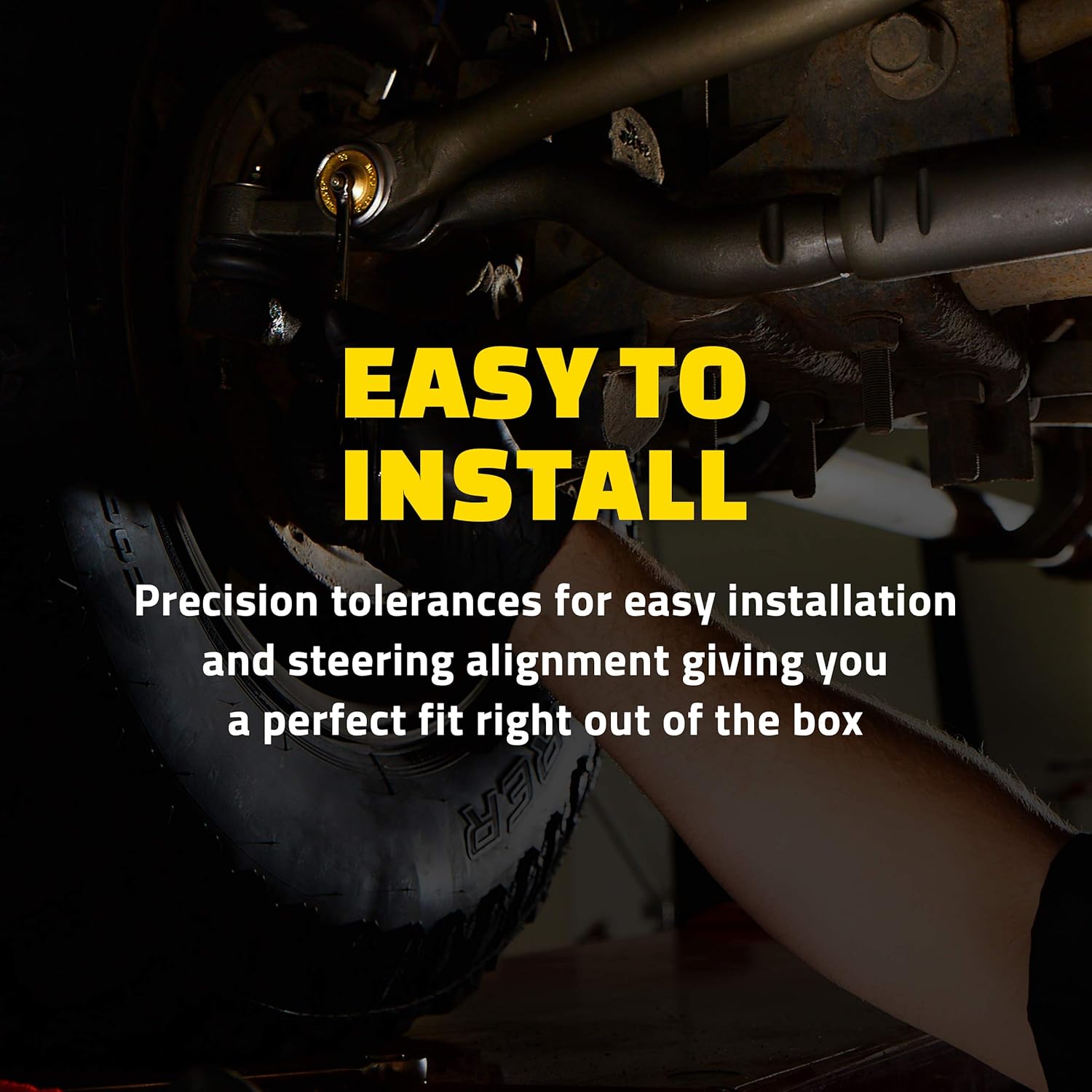
Imaxe: Primeiro plano view of a mechanic's hands working on a vehicle's suspension, with text indicating "Easy to Install" due to precision tolerances.
- Cobertura integral: Available for a wide range of foreign and domestic vehicle nameplates.
Instalación (Configuración)
Installation of a ball joint requires specialized tools and mechanical expertise. It is highly recommended that installation be performed by a qualified automotive technician. Improper installation can lead to severe safety hazards and vehicle damage.
General Steps (Consult Service Manual for Specifics):
- Levante e apoie o vehículo con seguridade sobre soportes hidráulicos.
- Remove the wheel and tire assembly.
- Disconnect the steering knuckle from the ball joint.
- Remove the old ball joint from the control arm.
- Clean the mounting surfaces thoroughly.
- Install the new MOOG K781 ball joint, ensuring proper seating and torque specifications as per the vehicle's service manual.
- Reconnect the steering knuckle.
- Reinstall the wheel and tire assembly.
- Perform a wheel alignment after installation to ensure correct steering geometry and tire wear.
Always refer to your vehicle's specific service manual for detailed, step-by-step instructions, torque specifications, and safety precautions.
Principios de funcionamento
The ball joint is a critical component of your vehicle's suspension system, acting as a pivot between the steering knuckle and the control arm. It allows for the necessary articulation of the suspension while maintaining proper wheel alignment and steering control. The MOOG K781 is designed to provide smooth, consistent movement and support the vehicle's weight, ensuring stable and predictable handling.
Mantemento
The MOOG K781 ball joint features a greaseable socket, which is a key advantage for extending its service life. Regular lubrication is essential for optimal performance and durability.
Programa de lubricación:
- Inspect and lubricate the ball joint at every oil change or as recommended by your vehicle's manufacturer or a qualified technician.
- Use a high-quality chassis grease (NLGI #2 lithium complex grease is commonly recommended).
- Attach a grease gun to the zerk fitting on the ball joint.
- Pump grease until a small amount of fresh grease begins to seep from the boot. This indicates that old contaminants have been flushed out and the joint is adequately lubricated.
- Wipe off any excess grease.
Regular lubrication helps to prevent corrosion, reduce friction, and flush out contaminants, all of which contribute to the long-term reliability and performance of the ball joint.
Solución de problemas comúns
While MOOG ball joints are designed for durability, certain symptoms may indicate a need for inspection or replacement. If you experience any of the following, consult a qualified technician.
- Symptom 1: Loose Steering or Wandering: If the vehicle feels loose or tends to wander on the road, it could indicate excessive play in the ball joint.

Image: Icon depicting a steering wheel with arrows indicating loose movement, representing Symptom 1.
- Symptom 2: Clunking or Popping Noises: Audible clunking or popping sounds, especially when going over bumps or turning, can be a sign of a worn ball joint.

Image: Icon depicting a steering wheel with vibration lines, representing Symptom 2 (clunking/popping noises).
- Symptom 3: Uneven Tire Wear: Abnormal or uneven tire wear patterns can result from improper wheel alignment caused by a failing ball joint.

Image: Icon depicting a car with wavy lines underneath, representing Symptom 3 (uneven tire wear).
- Symptom 4: Steering Wheel Vibration: Vibrations felt through the steering wheel, particularly at certain speeds, may indicate a problem with the ball joint or other suspension components.

Image: Icon depicting a tire with lines indicating wear, representing Symptom 4 (steering wheel vibration).
If you suspect a ball joint issue, it is crucial to have your vehicle inspected by a professional immediately to prevent further damage or safety risks.
Especificacións
| Especificación | Detalle |
|---|---|
| Fabricante | MOOG Chassis Products |
| Marca | MOOG |
| Modelo | ROTULA |
| Peso do elemento | 3.5 libras |
| Dimensións do produto | 13.25 x 4.5 x 2.75 polgadas |
| Número de modelo do artigo | K781 |
| Número de peza do fabricante | K781 |
| Número de peza OEM | K781 |
| Posición | Fronte |
| ASIN | B000C55ZKS |
| Data de primeira dispoñibilidade | 2 de decembro de 2005 |
Garantía e Soporte
For information regarding product warranty, returns, or technical support, please refer to the official MOOG website or contact MOOG customer service directly. Warranty terms and conditions may vary and are subject to the manufacturer's policies.
You can visit the official MOOG store for more information: MOOG Store on Amazon
Ask a question about this manual
Ask about setup, troubleshooting, compatibility, parts, safety, or missing instructions. Manuals+ will review the question and use this page’s manual context to help answer it.