
Denso 234-4622
Denso Oxygen Sensor User Manual
Modelo: 234-4622 | Marca: Denso
Introdución
This manual provides essential information for the installation, operation, and maintenance of your Denso 234-4622 Downstream Oxygen Sensor. This sensor is designed to accurately detect the amount of oxygen in your vehicle's exhaust system, contributing to optimal engine performance and emissions control.
As características principais inclúen:
- Constructed from high-quality Zirconium material.
- Features a double protection layer, aluminum oxide trap layer, PTFE filter, and stainless steel housing for durability.
- Manufactured with precision to meet OE standards.
- Designed for easy installation with a threaded mounting type and 18mm thread diameter.
O que hai na caixa
Upon opening the product packaging, you should find the following components:
- Denso 234-4622 Downstream Oxygen Sensor with 12” Harness and 4-Terminal Square Connector
- Small tube of anti-seize compound (typically pre-applied or included for threads)

Image: Denso Oxygen Sensor product packaging, showing the box with model number 234-9049 (note: actual product is 234-4622, box might be generic or for a related model) and UPC 042511146228.
Información de seguridade
AVISO: This product contains chemicals known to the State of California to cause cancer and birth defects or other reproductive harm. Always handle with care and wash hands thoroughly after handling.
- Use sempre o equipo de protección individual (EPI) axeitado, como luvas e protección ocular, durante a instalación.
- Ensure the vehicle's engine is completely cool before attempting any work on the exhaust system to prevent burns.
- Disconnect the vehicle's battery before starting installation to prevent electrical hazards.
- Traballar nunha zona ben ventilada.
Configuración e instalación
For detailed installation instructions, please refer to the official PDF manuals provided by Denso:
General steps and important considerations for installation:
- Preparación: Ensure the vehicle's engine is cold. Gather necessary tools, including an oxygen sensor socket (22mm or 7/8 inch), a ratchet, and potentially a breaker bar for seized sensors. Consider using a penetrating lubricant like WD-40 on the old sensor threads if it's difficult to remove.
- Localiza o sensor: The 234-4622 is a downstream oxygen sensor, typically located after the catalytic converter in the exhaust system. Its exact location may vary by vehicle model.
- Desconectar batería: Desconecte o terminal negativo da batería do vehículo.
- Desconectar o conector eléctrico: Carefully disconnect the electrical connector from the old oxygen sensor. This may require pressing a release tab or using a small flathead screwdriver to disengage the lock.
- Eliminar o sensor antigo: Use the oxygen sensor socket and ratchet to unscrew the old sensor. If it's seized, a breaker bar may be necessary. Turn counter-clockwise to loosen.
- Preparar o novo sensor: The new Denso sensor typically comes with anti-seize compound pre-applied to the threads. If not, apply a small amount of the provided anti-seize compound to the threads of the new sensor, being careful not to get any on the sensor tip.
- Instalar un novo sensor: Carefully thread the new sensor into the exhaust bung by hand to avoid cross-threading. Once hand-tight, use the oxygen sensor socket and ratchet to tighten it securely. Do not overtighten.
- Conectar o conector eléctrico: Reconnect the electrical connector to the new sensor, ensuring it clicks into place.
- Volver conectar a batería: Volva conectar o terminal negativo da batería do vehículo.
- Códigos claros (se é necesario): If your check engine light was on, you may need an OBD-II scanner to clear the diagnostic trouble codes (DTCs).

Image: The Denso 234-4622 Oxygen Sensor, showing the sensor tip, threaded body, wiring harness, and 4-terminal square connector.
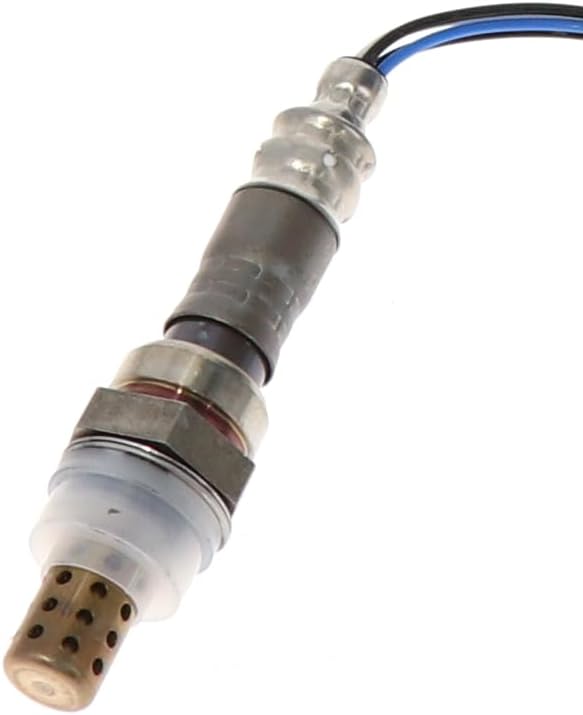
Imaxe: Primeiro plano view of the Denso Oxygen Sensor's thimble-type tip with multiple holes, designed for optimal gas flow and detection.

Imaxe: Primeiro plano view of the Denso Oxygen Sensor's 4-terminal square electrical connector, ensuring a secure and proper connection to the vehicle's wiring harness.
Principios de funcionamento
An oxygen sensor, also known as a lambda sensor, is a key component in your vehicle's engine management system. It measures the proportion of oxygen in the exhaust gas. This information is then sent to the engine control unit (ECU), which uses it to adjust the air-fuel mixture for optimal combustion.
The downstream oxygen sensor (Sensor 2) is located after the catalytic converter. Its primary function is to monitor the efficiency of the catalytic converter by comparing the oxygen levels before and after it. A properly functioning catalytic converter should show a relatively stable oxygen reading from the downstream sensor, indicating it is effectively reducing emissions.
Mantemento
Oxygen sensors are wear-and-tear items and typically do not require routine maintenance. Their lifespan can vary depending on driving conditions, fuel quality, and engine health. Common indicators that an oxygen sensor may need replacement include:
- Illumination of the Check Engine Light (CEL) on your dashboard.
- Menor eficiencia do combustible.
- Rough idling or engine hesitation.
- Increased emissions or failed emissions test.
It is recommended to address any diagnostic trouble codes (DTCs) related to oxygen sensors promptly to maintain vehicle performance and prevent potential damage to other emission control components.
Resolución de problemas
If you experience issues after installing your new oxygen sensor, consider the following troubleshooting steps:
- A luz de comprobación do motor permanece acesa:
- Ensure the electrical connector is fully seated and locked.
- Verify that the sensor is securely tightened in the exhaust bung.
- Use an OBD-II scanner to re-read the codes. Common codes for a faulty downstream sensor include P0136 (O2 Sensor Circuit Malfunction Bank 1 Sensor 2) or P0137 (O2 Sensor Circuit Low Voltage Bank 1 Sensor 2).
- Clear the codes with the scanner. Sometimes, the ECU needs to be reset for the light to turn off.
- Rough Idling After Replacement:
It is normal for the vehicle to idle roughly for a short period after replacing an oxygen sensor. The vehicle's Engine Control Unit (ECU) needs time to re-calibrate its oxygen and fuel readings. Drive the vehicle for a while, and the rough idling should eventually subside as the ECU adapts.
- Other Related Issues:
In some cases, a downstream sensor error (Sensor 2) might be a symptom of a failing upstream sensor (Sensor 1, Air/Fuel Sensor). If issues persist, consider having both sensors checked by a qualified mechanic.
Especificacións
| Atributo | Valor |
|---|---|
| Marca | Denso |
| Número de modelo | 234-4622 |
| Dimensións do artigo (L x W x H) | 6 x 2 x 2 polgadas |
| Material | Circonio |
| Peso do elemento | 0.25 libras (4 onzas) |
| Tipo de montaxe | Con rosca |
| Diámetro de rosca | 18 mm |
| Vol. Subministración máximatage | 12 voltios (DC) |
| Clasificación de temperatura superior | 1832 graos Fahrenheit |
| UPC | 042511146228 |
| Primeira data dispoñible | 20 de setembro de 2007 |
Garantía e Soporte
Denso products are manufactured to high standards and typically come with a standard manufacturer's warranty. For specific warranty details, terms, and conditions, please refer to the documentation included with your product or visit the official Denso websitio.
For technical support, product inquiries, or further assistance, please visit the official Denso website or contact their customer service department. You can also refer to the provided PDF manuals for additional information.
- Oficial de Denso Websitio (General support link, assuming this is the correct one)
- Manual de instalación (PDF)
- Manual do usuario (PDF)
Documentos relacionados234-4622


Ask a question about this manual
Ask about setup, troubleshooting, compatibility, parts, safety, or missing instructions. Manuals+ will review the question and use this page’s manual context to help answer it.