1. Introdución
This manual provides instructions for setting up, operating, and maintaining your TP-Link Archer MR400 AC1350 Wireless Dual Band 4G LTE Router. Please read this manual carefully before using the device to ensure proper functionality and safety.
1.1 Contido do paquete
- Router TP-Link Archer MR400
- Adaptador de alimentación
- Cable Ethernet
- Guía de instalación rápida
1.2 Produto superadoview
The Archer MR400 is a 4G LTE router designed to provide high-speed internet access by utilizing a 4G LTE SIM card. It also supports dual-band Wi-Fi (2.4 GHz and 5 GHz) for connecting multiple devices.
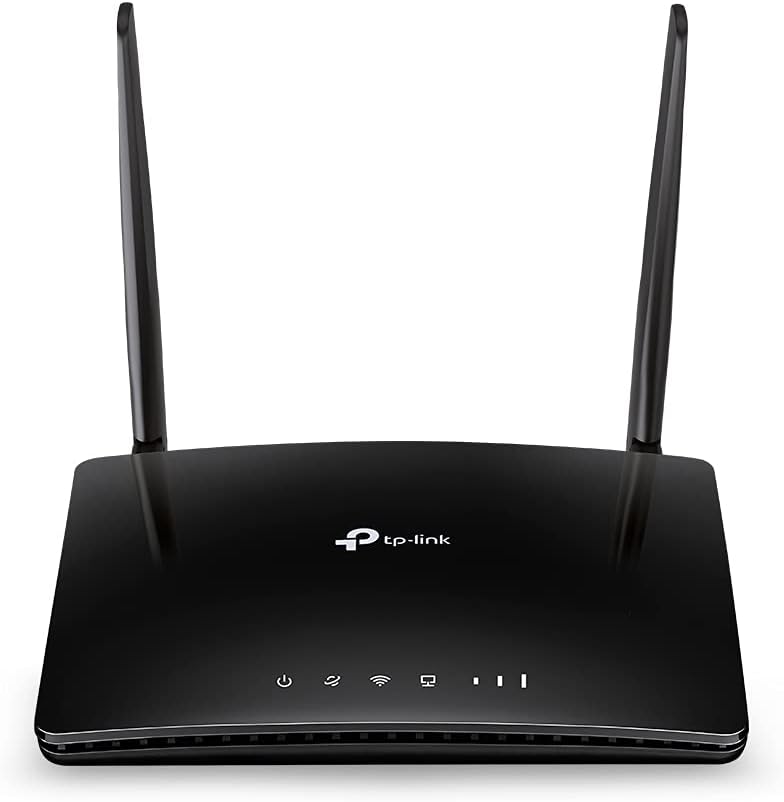
Imaxe 1.2.1: Fronte view of the TP-Link Archer MR400 AC1350 Wireless Dual Band 4G LTE Router. The router is black with two external antennas and LED indicators on the front panel.
1.2.1 Indicadores do panel frontal
- LED de alimentación: Indica o estado da enerxía.
- LED de Internet: Indica o estado da conexión a internet.
- LED Wi-Fi: Indicates Wi-Fi functionality status.
- LEDs LAN: Indicate connection status for LAN ports.
- LED de intensidade do sinal: Indicate the strength of the 4G LTE signal.

Imaxe 1.2.2: Traseira view of the TP-Link Archer MR400 router. From left to right, it shows the power input, three yellow LAN ports (LAN1, LAN2, LAN3), one yellow LAN/WAN port, a WiFi ON/OFF button, a WPS/RESET button, and a Nano SIM Card slot.
1.2.2 Portos e botóns do panel traseiro
- Porto de alimentación: Conéctase ao adaptador de corrente fornecido.
- LAN1, LAN2, LAN3 Ports: Portos Ethernet para conectar dispositivos con cable.
- LAN4/WAN Port: Can function as an additional LAN port or as a WAN port for connecting to a cable/fiber modem.
- WiFi ON/OFF Button: Toggles the wireless function on or off.
- Botón WPS/RESET: Press briefly for WPS function; press and hold for 5 seconds to reset the router to factory defaults.
- Ranura para tarxetas Nano SIM: Insert your 4G LTE Nano SIM card here.
2. Configuración
2.1 Instalación da tarxeta SIM
Before powering on the router, install your Nano SIM card. Ensure the router is powered off during this process.
- Localiza a ranura para tarxetas Nano SIM no panel traseiro do enrutador.
- Insert the Nano SIM card into the slot with the gold contacts facing down until it clicks into place.
- If you need to remove the SIM card, gently push it in until it springs out.

Imaxe 2.1.1: Illustration demonstrating the correct method for inserting a Nano SIM card into the dedicated slot on the TP-Link Archer MR400 router's rear panel. The SIM card is shown being pushed into the slot.
2.2 Conexión de hardware
- Connect the provided power adapter to the POWER port on the router and plug the other end into a power outlet.
- Wait for the router to power on. The Power LED should become solid.
- If you wish to use a wired connection, connect one end of an Ethernet cable to a LAN port on the router and the other end to your computer's Ethernet port.
2.3 Configuración inicial (Web Interface de xestión)
- Connect your computer or mobile device to the router via Wi-Fi (using the default SSID and password printed on the router's label) or an Ethernet cable.
- Abrir a web navegador e escriba
http://tplinkmodem.netorhttp://192.168.1.1na barra de enderezos. - Crea un novo contrasinal de inicio de sesión cando se che solicite.
- Follow the on-screen Quick Setup wizard to configure your internet connection and wireless settings. This typically involves selecting your region, confirming APN settings (if required by your ISP), and setting up your Wi-Fi network name (SSID) and password.
- Once the setup is complete, the Internet LED should turn solid, indicating a successful connection.
3. En funcionamento
3.1 Conexión de dispositivos
3.1.1 Conexión Wi-Fi
Para conectar dispositivos sen fíos:
- On your device (smartphone, tablet, laptop), enable Wi-Fi.
- Busca available Wi-Fi networks and select the SSID (network name) you configured during setup.
- Introduza o contrasinal da wifi cando se lle solicite.
3.1.2 Conexión Ethernet
To connect devices via Ethernet:
- Conecta un extremo dun cable Ethernet a un porto LAN do enrutador.
- Connect the other end of the Ethernet cable to the Ethernet port on your device (e.g., desktop computer, game console).

Imaxe 3.1.1: The TP-Link Archer MR400 router centrally located, providing wireless internet connectivity to various devices including a tablet, e-reader, laptop, and smartphone, illustrating its role in a connected home environment.
Acceso a Internet 3.2 4G LTE
The Archer MR400 primarily uses its inserted 4G LTE SIM card for internet access. Once the SIM card is installed and the router is powered on, it will automatically attempt to establish a 4G LTE connection. The signal strength LEDs on the front panel will indicate the quality of the cellular signal.

Imaxe 3.2.1: A visual representation of the TP-Link Archer MR400's network capabilities. It shows 4G LTE download speeds up to 150 Mbps and upload speeds up to 50 Mbps. It also highlights dual-band Wi-Fi, with 2.4 GHz offering up to 300 Mbps and 5 GHz offering up to 433 Mbps, connecting to various devices like a smartphone, tablet, and game controller.
3.3 WAN Connection Backup
The Archer MR400 supports a WAN connection backup feature. If your 4G LTE internet connection fails, the router can automatically switch to a wired WAN connection (e.g., from a DSL/Cable/Fiber modem) connected to the LAN4/WAN port.
- Connect your primary modem (e.g., cable modem) to the LAN4/WAN port of the Archer MR400 using an Ethernet cable.
- Accede a web interface de xestión (
http://tplinkmodem.net). - Navigate to the 'Network' > 'Internet' settings and configure the WAN connection type (e.g., Dynamic IP, Static IP, PPPoE) according to your ISP's requirements.
- Enable the 'WAN Backup' feature, setting 4G LTE as the primary connection and WAN as the backup.

Imaxe 3.3.1: This image illustrates the WAN connection backup feature of the TP-Link Archer MR400. The router is shown connected to a separate modem via its LAN4/WAN port, which is then connected to the internet, providing an alternative internet source if the 4G LTE connection is unavailable.
3.4 Configuración sen fíos
You can modify your Wi-Fi network name (SSID) and password through the web management interface. Navigate to 'Wireless' > 'Wireless Settings' to adjust these parameters for both 2.4 GHz and 5 GHz bands.
3.5 Funcionalidade WPS
The Wi-Fi Protected Setup (WPS) button allows you to quickly connect WPS-compatible devices to your Wi-Fi network without entering the password. Press the WPS/RESET button on the router, then activate WPS on your client device within two minutes.
4. Mantemento
4.1 Actualización de firmware
Regularly check for firmware updates to ensure optimal performance and security. Download the latest firmware from the TP-Link official website for your specific model (Archer MR400). Navigate to 'System Tools' > 'Firmware Upgrade' in the web management interface to perform the upgrade.
4.2 Configuración de copia de seguridade e restauración
Podes facer unha copia de seguridade dos axustes de configuración do teu enrutador nun file on your computer. This allows you to restore the settings later if needed, for example, after a factory reset or firmware upgrade. This option is typically found under 'System Tools' > 'Backup & Restore'.
4.3 Rexistro do sistema
The system log records various events and activities of the router, which can be useful for troubleshooting. Access the system log via 'System Tools' > 'System Log' in the web interface de xestión.
4.4 Reboot/Reset
- Reiniciar: You can reboot the router from the web management interface ('System Tools' > 'Reboot') or by simply unplugging and replugging the power adapter. A reboot can resolve minor issues.
- Restablecemento de fábrica: To restore the router to its factory default settings, press and hold the WPS/RESET button on the rear panel for approximately 5 seconds until the LEDs flash. Alternatively, you can perform a factory reset from the web management interface ('System Tools' > 'Backup & Restore' > 'Factory Restore'). Note: A factory reset will erase all your custom settings.
5 Solución de problemas
5.1 Sen acceso a Internet
- Ensure the SIM card is correctly inserted and activated with your mobile network provider.
- Check the signal strength LEDs on the front panel. If they are off or show low signal, try relocating the router to an area with better cellular reception.
- Verifica a configuración do APN no web management interface ('Network' > 'Internet'). These settings are usually provided by your mobile network operator.
- If using WAN backup, ensure the external modem is working correctly and connected to the LAN4/WAN port.
- Reinicie o router.
5.2 Problemas de conexión Wi-Fi
- Ensure the Wi-Fi LED on the front panel is on. If not, press the WiFi ON/OFF button on the rear panel.
- Verifica que estás a introducir o contrasinal wifi correcto.
- Check your device's Wi-Fi settings and ensure it is connecting to the correct SSID.
- Tenta achegarte máis ao router para mellorar a intensidade do sinal.
- If many devices are connected, consider reducing the number of active connections or optimizing Wi-Fi channels.
5.3 Non se pode acceder Web Interface de xestión
- Ensure your device is correctly connected to the router via Wi-Fi or Ethernet.
- Verifica que estás a escribir o enderezo correcto:
http://tplinkmodem.netorhttp://192.168.1.1. - Limpa a caché e as cookies do teu navegador ou proba cunha opción diferente web navegador.
- Desactiva temporalmente calquera cortafuegos ou software antivirus no teu ordenador.
- If you forgot your login password, you may need to perform a factory reset.
6. Especificacións
| Característica | Detalle |
|---|---|
| Nome do modelo | TP-link AC1350 (Archer MR400) |
| Estándar sen fíos | 802.11ac |
| Clase de banda de frecuencia | Dobre banda (2.4 GHz e 5 GHz) |
| 2.4 GHz Wi-Fi Speed | Ata 300 Mbps |
| 5 GHz Wi-Fi Speed | Ata 433 Mbps |
| Velocidade de descarga 4G LTE | Ata 150 Mbps |
| Velocidade de subida 4G LTE | Ata 50 Mbps |
| Tecnoloxía de conectividade | Wi-Fi, 4G LTE |
| Portos Ethernet | 3x LAN, 1x LAN/WAN |
| Ranura para tarxeta SIM | Nano SIM |
| Característica especial | WPS |
| Dimensións do produto | 5.51 x 1.34 x 7.87 polgadas |
| Peso do elemento | 11.6 onzas |
| Cor | Negro |
| Fabricante | TP-LINK |
7. Garantía e soporte
7.1 Información da garantía
TP-Link products typically come with a limited warranty. For specific warranty terms and conditions applicable to your region and product, please refer to the warranty card included with your product or visit the official TP-Link websitio.
7.2 Soporte técnico
For technical support, firmware updates, and additional resources, please visit the official TP-Link support websitio:
You can find FAQs, troubleshooting guides, and contact information for customer service on their websitio.