Introdución
The AKG C 451 B is a small-diaphragm condenser microphone, known for its clear and airy sound. It is a modern iteration of the classic C451 EB + CK1 capsule, first introduced in 1969. This microphone is designed for high-quality audio capture, offering a high overload limit and robust construction suitable for various recording environments, including demanding live sound applications. Its low-noise preamp electronics ensure reliable performance.
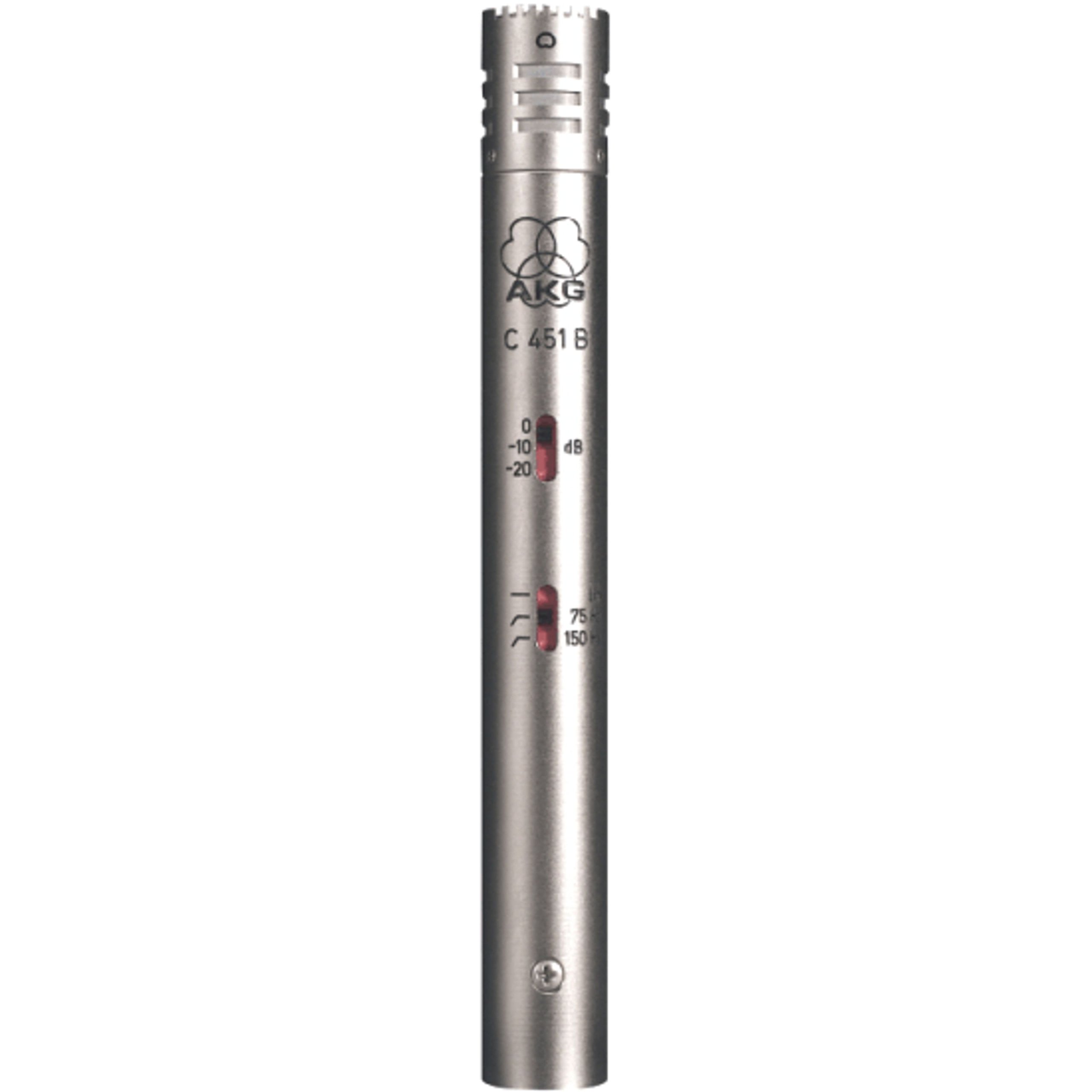
Image: The AKG C 451 B small-diaphragm condenser microphone, shown with its nickel finish and integrated stand adapter.
Características clave
- Acoustical Performance: Delivers stunning sound quality with maximum accuracy, replicating the legendary C451 EB + CK1 capsule.
- Roadworthy Design: An established tour sound standard since the 1980s, ensuring excellent sound quality even under harsh on-stage condicións.
- High SPL Capability: Impressive sound pressure level capability of 155dB SPL allows close-miking of high-energy sound sources without distortion.
- Effective High-Pass Filter: Features a highly effective high-pass filter with 12dB/octave to prevent low-end distortion caused by rumble or wind noise.
- Low Distortion Preamp: Transformerless preamp and surface mount technology provide extremely low distortion, high reliability, and reduced weight.
Configuración
- Desembalaxe: Carefully remove the C 451 B microphone and any included accessories from its packaging. The package typically includes the microphone itself.
- Montaxe: Attach the microphone to a suitable microphone stand using the provided stand adapter. Ensure it is securely fastened.
- Conexión: Connect the microphone to your audio interface, mixer, or preamplifier using a balanced XLR cable. The C 451 B requires 48V phantom power to operate. Verify that your connected device can supply this power and activate it.
- Posicionamento: Position the microphone according to your recording or live sound needs. For instruments, experiment with distance and angle to achieve the desired sound.

Imaxe: Primeiro plano view of the AKG C 451 B microphone, highlighting the XLR connector at the base and the switches for pad and high-pass filter.
Operating the C 451 B
The AKG C 451 B features switches on its body to adjust its response for various recording situations.
- Filtro paso alto: The microphone includes a switchable high-pass filter (bass cut) with a slope of 12dB/octave. This filter helps to reduce unwanted low-frequency noise such as rumble, stage vibrations, or wind noise.
- Flat (0): No high-pass filtering applied.
- 75 Hz: Engages a high-pass filter at 75 Hz.
- 150 Hz: Engages a high-pass filter at 150 Hz.
- Pre-attenuation Pad: The C 451 B is equipped with a switchable pre-attenuation pad to handle very loud sound sources without overloading the microphone's electronics or the input of your preampmáis vivo.
- 0 dB: No attenuation applied.
- -10 dB: Reduces the microphone's output by 10 dB.
- -20 dB: Reduces the microphone's output by 20 dB.
Always ensure phantom power is supplied to the microphone for proper operation.
Mantemento
- Limpeza: Usa un pano suave e seco para limpar o corpo do micrófono. Evita usar produtos de limpeza líquidos ou solventes, xa que poden danar o acabado ou os compoñentes internos.
- Almacenamento: When not in use, store the microphone in its protective case or a clean, dry environment to prevent dust accumulation and physical damage.
- Manexo: Handle the microphone with care. Avoid dropping it or subjecting it to strong impacts, which can affect its delicate internal capsule.
- Condicións ambientais: Protect the microphone from extreme temperatures, high humidity, and direct moisture.
Resolución de problemas
| Problema | Causa posible | Solución |
|---|---|---|
| Sen saída de son | Sen alimentación phantom; cable defectuoso; selección de entrada incorrecta no mesturador/interface. | Ensure 48V phantom power is enabled. Check XLR cable for damage. Verify correct input channel is selected and gain is adjusted. |
| Son distorsionado | Input overload (too loud source); pre-attenuation pad not engaged; excessive gain. | Engage the -10 dB or -20 dB pre-attenuation pad. Reduce the gain on your preamplifier or mixer. Move the microphone further from the sound source. |
| Excessive low-frequency noise (rumble) | Stage vibrations; wind noise; proximity effect. | Engage the high-pass filter (75 Hz or 150 Hz). Use a shock mount to isolate vibrations. Use a windscreen for outdoor or windy conditions. |
| Sinal débil ou inconsistente | Faulty cable; insufficient phantom power; damaged microphone. | Try a different XLR cable. Confirm stable 48V phantom power supply. If issues persist, contact AKG support. |
Especificacións
| Característica | Detalle |
|---|---|
| Factor de forma do micrófono | Diafragma pequeno |
| Patrón polar | Unidireccional |
| Tecnoloxía de conectividade | Con cable |
| Tipo de conector | XLR equilibrado |
| Fonte de enerxía | Eléctrico con cable (alimentación phantom de 48 V) |
| Sensibilidade Audio | 155 Decibels (Max SPL) |
| Relación sinal-ruído | 76 dB |
| Resposta en frecuencia | 20 Hz - 20 kHz |
| Peso do elemento | 1.19 libras (aprox. 0.54 kg) |
| Dimensións do produto (L x W x H) | 11.7 x 5.9 x 3.5 polgadas (aprox. 29.7 x 15 x 8.9 cm) |
| Material | Aceiro inoxidable |
| Cor | Níquel |
| Compoñentes incluídos | Micrófono |
Garantía e Soporte
For warranty information and technical support, please refer to the official AKG website or contact your authorized AKG dealer. Keep your proof of purchase for warranty claims.
Recursos en liña: Visita o AKG Store on Amazon para obter información adicional sobre o produto e accesorios.


