1. Introdución
This manual provides detailed instructions for the installation, configuration, operation, and maintenance of your D-Link DNS-320L Cloud Storage 2-Bay Network Attached Storage (NAS) device. Please read this manual thoroughly before using the device to ensure proper setup and optimal performance. The DNS-320L is designed to provide a centralized storage solution for your home or small office network, offering data redundancy, remote access, and media streaming capabilities.
2. Información de seguridade
- Asegúrate de colocar o dispositivo sobre unha superficie estable e plana para evitar caídas accidentais.
- Non expoñas o dispositivo á auga, á humidade nin a temperaturas extremas.
- Use only the power adapter supplied with the device. Using an incorrect adapter may damage the device and void the warranty.
- Non abra o dispositivo casing. Encomende todo o mantemento a persoal cualificado.
- Manteña despexadas as aberturas de ventilación para evitar o sobrequecemento.
- Disconnect the power cable before cleaning or moving the device.
3. Contido do paquete
Verifique que o seu paquete conteña os seguintes elementos:
- D-Link DNS-320L Cloud Storage 2-Bay NAS Enclosure
- Adaptador de alimentación
- Cable Ethernet
- Guía de instalación rápida
- Resource CD (may include software and full manual)
Se falta algún elemento ou está danado, póñase en contacto co seu vendedor ou co servizo de asistencia de D-Link.
4. Sobrecarga físicaview
Familiarize yourself with the ports, buttons, and indicators on your DNS-320L device.
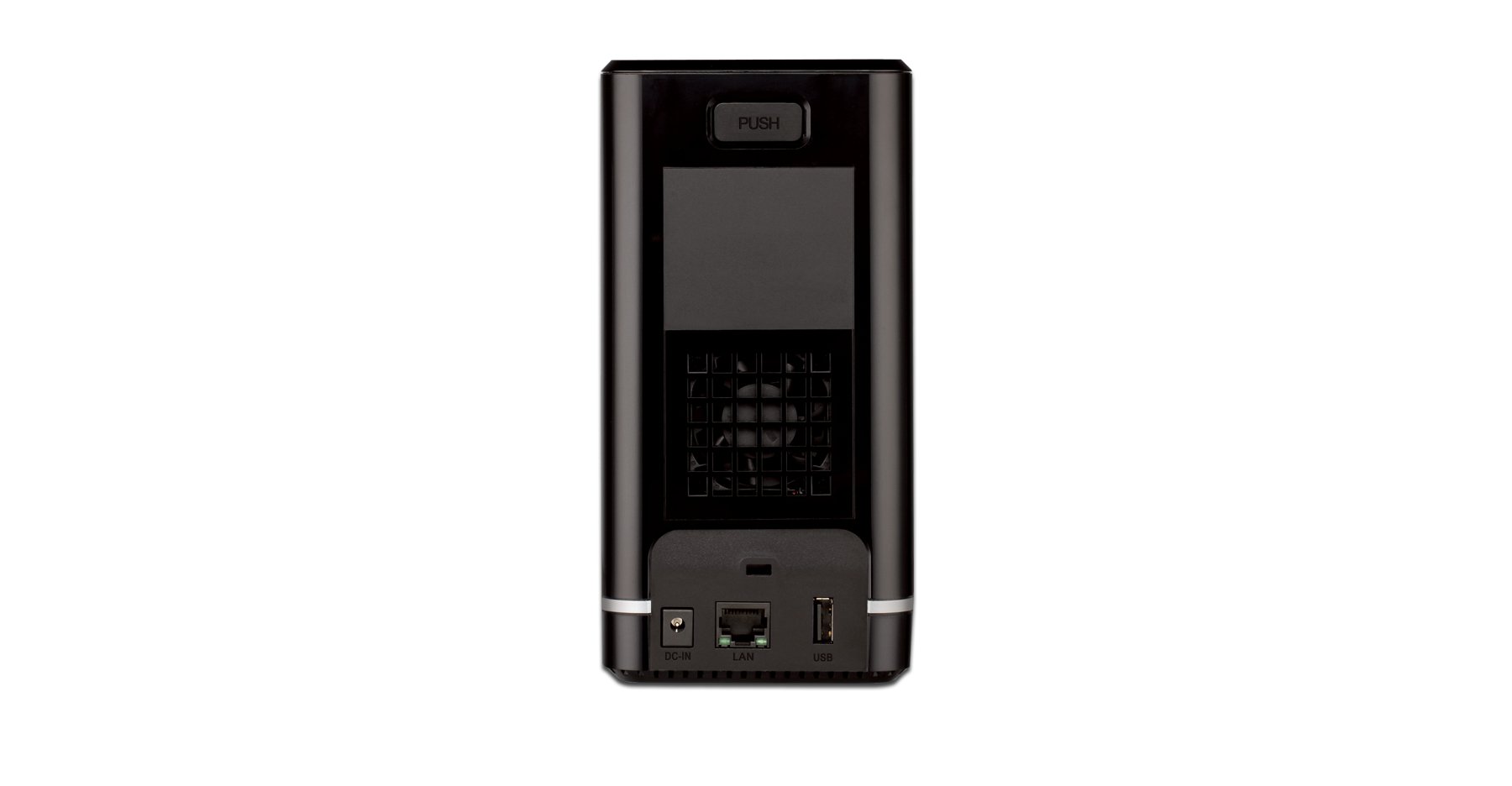
Figura 4.1: Fronte View of D-Link DNS-320L. This image displays the front panel of the DNS-320L, typically showing LED indicators for power, network activity, and hard drive status. It may also feature a power button and a USB port for quick access.
4.1 Panel frontal
- LED de alimentación: Indica o estado da enerxía.
- HDD 1/2 LEDs: Indicate hard drive activity and status for each bay.
- Porto USB: For connecting external USB storage devices or printers.
- Botón de encendido: Para acender/apagar o dispositivo.
4.2 Panel posterior
- Porto Gigabit Ethernet: Connects the NAS to your network router or switch.
- Conector de alimentación: Para conectar o adaptador de alimentación.
- Botón de reinicio: Used to restore factory default settings (requires a paperclip or similar pointed object).
- Ranura de bloqueo Kensington: Para a seguridade física.
5. Instalación de hardware
This section guides you through installing hard drives and connecting the DNS-320L to your network.
5.1 Instalación de discos duros
The DNS-320L supports two 3.5-inch SATA hard drives. Ensure your drives are compatible and unformatted for initial setup.
- Ensure the DNS-320L is powered off and disconnected from the power outlet.
- Gently slide open the front cover of the NAS enclosure.
- Slide each hard drive into an available bay until it clicks into place, ensuring the SATA connectors align properly. No screws are typically required for tool-less installation.
- Pecha a tapa frontal de forma segura.
Figure 5.1: Hard Drive Installation. This image illustrates the process of inserting a 3.5-inch SATA hard drive into one of the bays of the DNS-320L, highlighting the tool-less design.
5.2 Connecting the NAS to Your Network
- Connect one end of the Ethernet cable to the Gigabit Ethernet port on the rear of the DNS-320L.
- Conecte o outro extremo do cable Ethernet a un porto LAN dispoñible no seu enrutador ou conmutador de rede.
- Connect the power adapter to the power connector on the rear of the DNS-320L, then plug the adapter into a power outlet.
- Press the Power button on the front panel to turn on the device. The Power LED will illuminate, and the HDD LEDs will flash during startup.
6. Configuración inicial
After hardware installation, you will need to configure the DNS-320L using its webinterface de xestión baseada en
6.1 Acceso ao Web Interface
- Ensure your computer is connected to the same network as the DNS-320L.
- Abrir a web navegador (por exemplo, Chrome, Firefox, Edge).
- The DNS-320L typically obtains an IP address automatically via DHCP. You can use the D-Link ShareCenter Utility (if provided on the Resource CD or D-Link website) to discover its IP address. Alternatively, try accessing
http://dlinksharecenterorhttp://dlinksharecenter.local. - Introduza o nome de usuario predeterminado (normalmente
admin) and leave the password blank (oradmin) to log in for the first time. You will be prompted to change the password.
6.2 Running the Setup Wizard
Upon first login, a setup wizard will guide you through essential configurations:
- Disk Volume Creation: You will be prompted to create a disk volume. Options typically include:
- Estándar: Each drive is treated as a separate volume.
- RAID 0 (dividendo en franxas): Combines drives for maximum capacity and performance, but offers no data redundancy. If one drive fails, all data is lost.
- RAID 1 (Replicación): Mirrors data across both drives, providing data redundancy. If one drive fails, data is preserved on the other. Capacity is limited to the size of one drive.
- JBOD (Só un feixe de discos): Combines drives into a single large volume sequentially. No performance or redundancy benefits.
Choose RAID 1 for data protection. RAID 0 offers speed but no protection.
- User Account Creation: Create at least one user account with administrative privileges.
- Configuración de rede: Confirm or adjust network settings (DHCP or static IP).
- Zona horaria: Define a data e a hora correctas.
7. Operating the DNS-320L
This section covers common operational tasks for your NAS.
7.1 Accessing Shared Folders
After setup, shared folders will be accessible from your network:
- Windows: Aberto File Explorer, type
\DNS-320L(or its IP address) in the address bar, and press Enter. - macOS: In Finder, go to Vaia> Conectarse ao servidor, tipo
smb://DNS-320L(or its IP address), and click Connect. - Linux: Usa o teu file manager's network browsing feature or mount the share using SMB/CIFS.
7.2 User and Group Management
Manage who can access your NAS and what permissions they have:
- Inicia sesión no web interface as an administrator.
- Navega ata Management > User Management or similar section.
- Create new users, assign passwords, and add them to groups.
- Configure folder permissions for users and groups (Read/Write, Read Only, No Access).
7.3 Cloud Access and Remote Management
The DNS-320L supports D-Link's Cloud features for remote access.
- Register your device with the D-Link Cloud service (if applicable, refer to D-Link's official documentation for specific steps).
- Use the D-Link mobile app (e.g., mydlink ShareCenter) to access files remotely from your smartphone or tablet.
- Configure port forwarding on your router if direct remote access to the web interface is desired (advanced users only, consult your router manual).
7.4 USB Device Functionality
The USB 2.0 port on the front panel can be used for:
- Almacenamento externo: Connect USB hard drives or flash drives to expand storage or for backup purposes. These devices will appear as shared folders.
- Impresora USB: Connect a compatible USB printer to share it across your network.
8. Mantemento
Regular maintenance ensures the longevity and reliability of your DNS-320L.
8.1 Actualizacións de firmware
Periodically check for and install firmware updates from the D-Link support website. Firmware updates can provide new features, performance improvements, and security patches.
- Descarga o firmware máis recente file for your DNS-320L model from the official D-Link support site.
- Log in to the NAS web interface as an administrator.
- Navega ata Management > Firmware Upgrade or a similar section.
- Navega ata o firmware descargado file and initiate the upgrade process. Do not power off the device during the update.
8.2 Copia de seguranza de datos
While RAID 1 provides redundancy against a single drive failure, it is not a substitute for a comprehensive backup strategy. Regularly back up critical data from your NAS to an external drive or another storage location.
8.3 Limpeza
Keep the device clean to ensure proper airflow and prevent dust buildup.
- Apague e desconecte o dispositivo antes de limpalo.
- Use un pano suave e seco para limpar o exterior.
- Use aire comprimido para eliminar o po das aberturas de ventilación.
9 Solución de problemas
This section addresses common issues you might encounter with your DNS-320L.
| Problema | Posible Solución |
|---|---|
| O dispositivo non se acende. | Ensure the power adapter is securely connected to both the device and a working power outlet. Test the outlet with another device. |
| Cannot access the NAS on the network. | Verify the Ethernet cable is properly connected. Check network settings on your computer and router. Ensure the NAS has an IP address (use the D-Link utility). Try restarting the NAS and your router. |
| Hard drive LED is red or flashing abnormally. | This may indicate a drive error or failure. Check the NAS web interface for drive status. If a drive has failed in a RAID 1 configuration, replace the faulty drive and rebuild the array. |
| Esquecín o contrasinal do administrador. | Use the reset button on the rear panel to restore factory default settings. Warning: This will erase all configurations, but typically not data on the drives. You will need to reconfigure the NAS. |
| Lento file velocidades de transferencia. | Ensure all network components (NAS, router, computer) support Gigabit Ethernet. Check for network congestion or faulty cables. |
10. Especificacións
Key technical specifications for the D-Link DNS-320L:
| Característica | Detalle |
|---|---|
| Número de modelo | DNS-320L |
| Unidade Bays | 2 x 3.5-inch SATA I/II/III HDD |
| Soporte RAID | Standard, JBOD, RAID 0, RAID 1 |
| Interface de rede | 1 x Gigabit Ethernet (10/100/1000 Mbps) |
| Portos USB | 1 x USB 2.0 |
| Plataforma de hardware | Mac, PC |
| Dimensións (LxWxH) | 3.54 x 5.68 x 7.61 polgadas |
| Peso do elemento | 1.39 pounds (without drives) |
| Cor | Negro |
| Material | Metal |
| Dispositivos compatibles | CPU, Desktop, Laptop, Server |
11. Garantía e soporte
Para obter información sobre a garantía, consulte a tarxeta de garantía incluída co produto ou visite o sitio web oficial de D-Link. website. D-Link provides technical support and resources to assist you with your DNS-320L.
- Soporte en liña: Visita www.dlink.com/soporte for FAQs, troubleshooting guides, firmware downloads, and product documentation.
- Soporte técnico: Contact D-Link technical support for assistance with installation, configuration, or troubleshooting issues that cannot be resolved using this manual or online resources. Contact details are available on the D-Link support websitio para a súa rexión.


