1. Produto rematadoview
The OMNITRONIC STR-1000 is a robust and durable pocket receiver designed for in-ear monitoring applications. It functions as a replacement or extension unit for the OMNITRONIC IEM-1000 in-ear monitoring system, operating within the 823-832 MHz duplex frequency range. This device provides reliable audio reception for performers and presenters, ensuring clear sound transmission directly to the user's earphones.
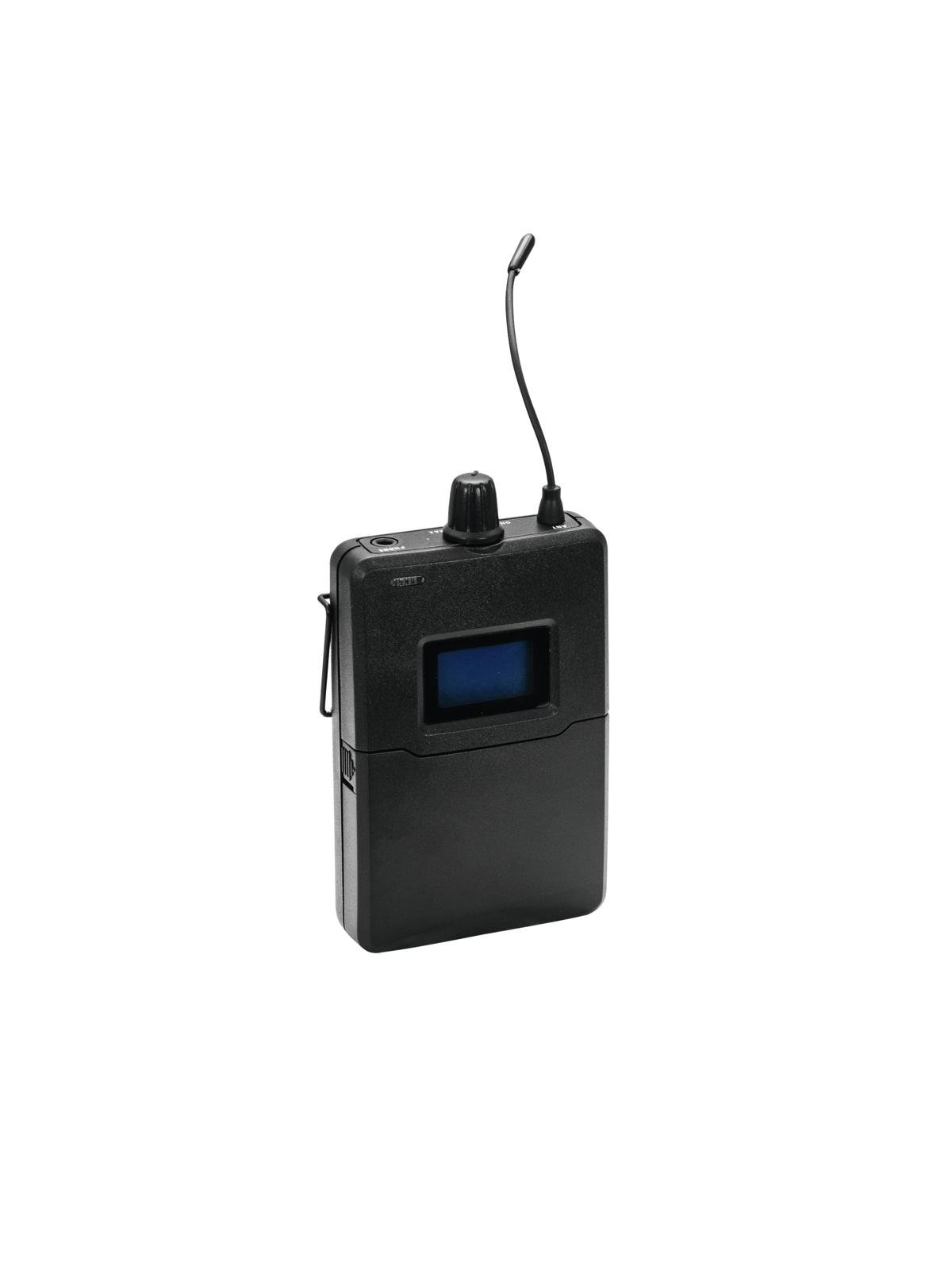
Imaxe 1.1: Fronte view of the OMNITRONIC STR-1000 Pocket Receiver, showing its compact design and controls.
2. Contido do paquete
Verifique que todos os elementos estean presentes no paquete. Se falta algún elemento ou está danado, póñase en contacto co seu distribuidor inmediatamente.
- 1x OMNITRONIC STR-1000 Pocket Receiver
- 1x Pair of Mini Earphones
- 1x Transport Case
- 1x Manual de usuario (este documento)
3. Instrucións de configuración
Follow these steps for the initial setup of your STR-1000 pocket receiver.
- Instalar baterías: Open the battery compartment cover on the back of the receiver. Insert two fresh AA batteries, ensuring correct polarity (+/-). Close the cover securely.
- Conectar auriculares: Plug the mini earphones into the 3.5mm (1/8-inch) stereo jack located on the top or side of the receiver. Ensure the plug is fully inserted.
- Encendido: Press and hold the power button (usually located on the front or side) until the display illuminates.
- Sincronización de frecuencia: The STR-1000 must be synchronized with an OMNITRONIC IEM-1000 transmitter. Refer to the IEM-1000 transmitter manual for specific instructions on how to pair or synchronize the receiver's frequency with the transmitter's output. Typically, this involves setting the receiver to the same frequency channel as the transmitter.
- Axuste de volume: Start with the volume control at a low setting before placing the earphones in your ears. Gradually increase the volume to a comfortable listening level once audio is received.
4. Operating the STR-1000
The STR-1000 is designed for straightforward operation. Familiarize yourself with the controls for optimal use.
- Encendido/apagado: Press and hold the power button to turn the unit on or off. A short press may activate a mute function or display backlight, depending on the model's specific design.
- Control de volume: Use the dedicated volume up/down buttons or rotary knob to adjust the listening level. Always adjust to a comfortable level to prevent hearing damage.
- Selección de canles: If your receiver supports multiple channels, use the channel selection buttons (often labeled "Up" and "Down" or "CH") to cycle through available frequencies. Ensure the selected channel matches the transmitter's output.
- Mostrar información: The receiver's display typically shows the current channel, battery status, and signal strength. Monitor these indicators during operation.
- Rango de frecuencia: The STR-1000 operates in the 823-832 MHz duplex range. This frequency band is generally license-free and registration-free within the EU. However, it is crucial to verify specific regulations in your country of use, as local laws may vary.
5. Mantemento e coidados
Proper maintenance ensures the longevity and reliable performance of your STR-1000 receiver.
- Limpeza: Use a soft, dry cloth to clean the exterior of the receiver. Do not use liquid cleaners, solvents, or abrasive materials, as these can damage the finish or internal components.
- Coidado da batería: Remove batteries if the receiver will not be used for an extended period to prevent leakage and damage. Dispose of used batteries responsibly according to local regulations.
- Almacenamento: Store the receiver in its transport case in a cool, dry place, away from direct sunlight, extreme temperatures, and high humidity.
- Earphone Care: Clean earphones regularly with a soft, damp cloth. Replace ear tips if they become worn or damaged for optimal hygiene and sound quality.
6. Guía de solución de problemas
If you encounter issues with your STR-1000, consult the following table before contacting support.
| Problema | Causa posible | Solución |
|---|---|---|
| Non hai son dos auriculares |
|
|
| Static or intermittent audio |
|
|
| Receiver does not power on |
|
|
7. Especificacións técnicas
| Característica | Especificación |
|---|---|
| Marca | Omnitrónico |
| Nome do modelo | STR-1000 |
| Número de modelo | 14013241 |
| ASIN | B00TZP6PFK |
| Rango de frecuencias | 823-832 MHz (Duplex) |
| Conexións | AUX (3.5mm stereo jack for earphones) |
| Fonte de alimentación | 2 pilas AA (non incluídas) |
| Compatibilidade | OMNITRONIC IEM-1000 In-Ear Monitoring System |
| License Status (EU) | License-free and registration-free (verify local regulations) |
8. Información importante de seguridade
Read and follow all safety instructions to prevent injury or damage to the device.
- Protección auditiva: Avoid listening at high volume levels for extended periods to prevent hearing damage. Always start with a low volume and gradually increase it.
- Seguridade da batería: Use only specified battery types. Do not mix old and new batteries, or different types of batteries. Do not expose batteries to excessive heat or fire.
- Auga e humidade: Do not expose the receiver to rain, moisture, or liquids. If the device comes into contact with liquid, immediately power it off and remove batteries.
- Calor: Do not place the receiver near heat sources such as radiators, heat registers, stoves, or other apparatus (including amplificadores) que producen calor.
- Servizo: Non intente atender este produto vostede mesmo. Remita todo o servizo a persoal de servizo cualificado.
- Eliminación: Dispose of this product and its batteries in accordance with local environmental regulations. Do not dispose of with household waste.
9. Garantía e soporte
For warranty information, technical support, or service inquiries, please refer to the documentation provided with your purchase or contact your authorized Omnitronic dealer. Keep your proof of purchase for warranty claims.
Omnitronic products are manufactured by Steinigke Showtechnic, a company known for reliable quality since 1979.


